
Microgreens or Sprouts?
A simple guide to understanding the difference between microgreens and sprouts and choosing what to grow at home.
Microgreens or Sprouts?
Two ways to grow. One simple beginning.
Microgreens and sprouts both begin with a seed, but the way they are grown — and the way we enjoy them — is different.
Some seed varieties can be grown either way, while others are better suited to one method. Understanding the difference makes it easier to choose what you want to grow and how you want to use it.
What Are Microgreens?
Microgreens are young plants harvested shortly after their first leaves have developed.
They are grown on a growing medium, such as the hemp or wool mats used in the GW Grow system. After germination, they are exposed to light and allowed to develop stems and young leaves before being cut just above the growing surface.
Depending on the variety, they can be mild, sweet, peppery, spicy or aromatic — and they bring both flavour and freshness to everyday food.
What Are Sprouts?
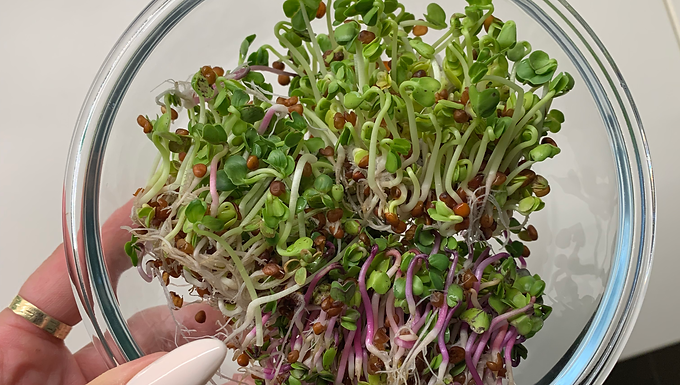
Sprouts are seeds germinated without a growing mat or soil.
They are typically grown in a sprouting jar using water, regular rinsing and good drainage. The seed, root and developing shoot are harvested together.
Because they do not need a growing medium or a long growing period, sprouts are one of the simplest ways to grow fresh food at home.
The Main Difference
Microgreens grow on a growing medium, receive light and are harvested above the roots.
Sprouts grow without a growing medium and are eaten together with the germinated seed and root.
Both begin with the same simple process — giving a seed the conditions it needs to come to life.
Can the Same Seeds Be Used for Both?
Sometimes.
Several varieties can be enjoyed as either sprouts or microgreens. Broccoli, alfalfa, radish, kale, mustard and fenugreek are examples of seeds that can be grown in different ways.
Other varieties are more naturally suited to a particular growing method. Mung Bean and Adzuki Bean, for example, are particularly well suited to sprouting, while herbs such as Basil and Dill are better suited to growing as microgreens.
Always follow the growing guidance for the method you have chosen.
Which Should I Grow?
Choose microgreens when you want tender young greens, distinctive flavours, beautiful colours and something you can cut fresh directly onto your meals.
Choose sprouts when you want a quick, simple growing process and fresh, crisp growth that requires very little space.
Or grow both.
There is no need to choose one permanently — part of growing at home is discovering which varieties and methods naturally become part of your everyday life.
A Simple Way to Begin
If you are completely new to growing, start with something easy.
For microgreens, varieties such as Broccoli Calabrese, Radish Daikon or Kale Green are good places to begin.
For sprouts, Mung Bean or Alfalfa offer a simple introduction to sprouting.
Once you understand the basic rhythm of watering, rinsing, light and harvesting, experimenting with different varieties becomes part of the enjoyment.
Good to Know
Growing times, soaking requirements and seed quantities vary between varieties.
Use the Variety Guides for individual growing information and the Seed Density Calculator to find the recommended amount of seed for your growing tray or sprouting jar.
Why Grow Both?
Microgreens and sprouts offer two different ways of experiencing something remarkably simple: watching fresh food grow from seed in your own home.
One grows upward toward the light. The other quietly develops inside a jar. Both bring the growing process closer to the food you eventually put on your plate.
Start small. Grow fresh. Make it part of everyday life.
